Choux Pastry: The Story and Secrets of the French Pastry Symbol
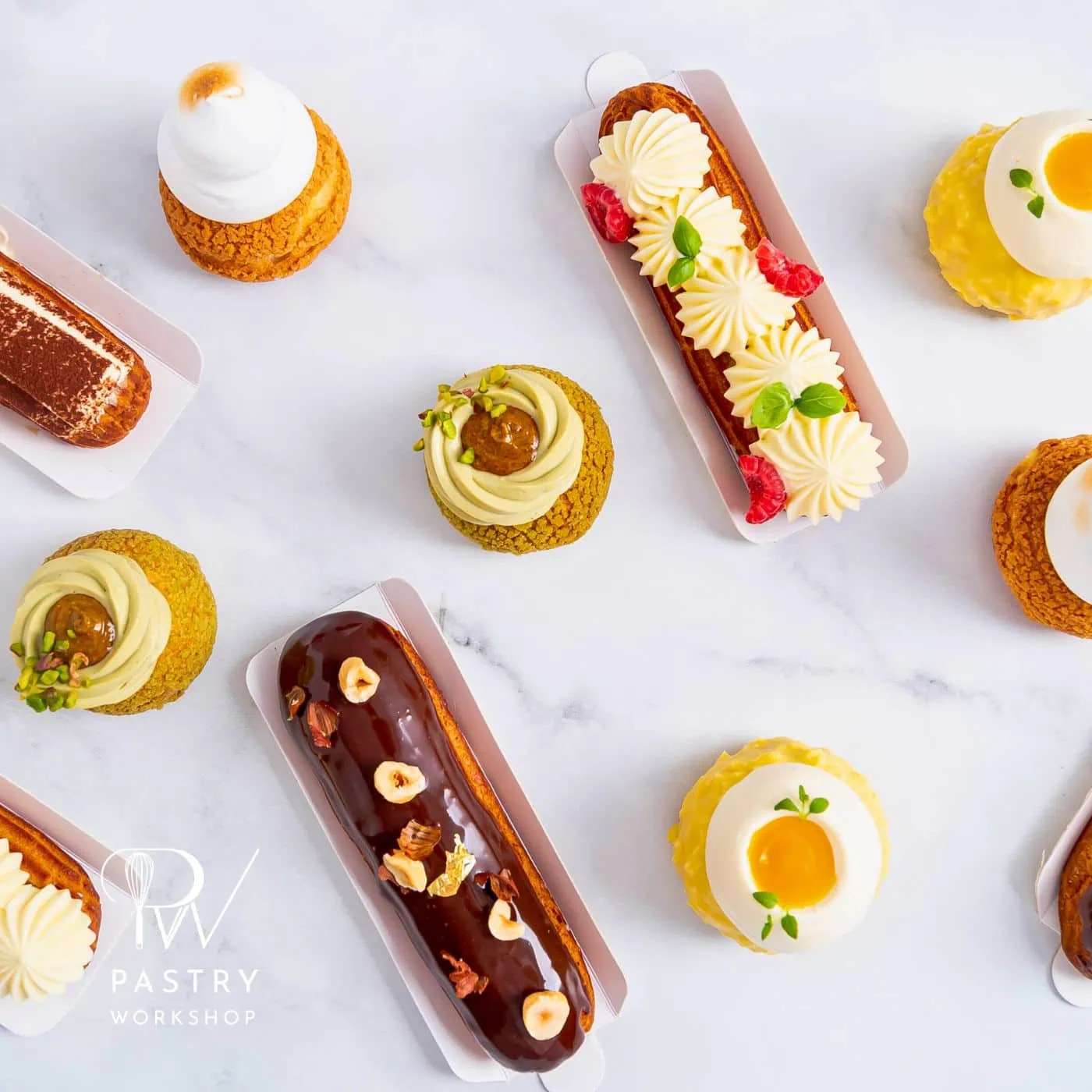
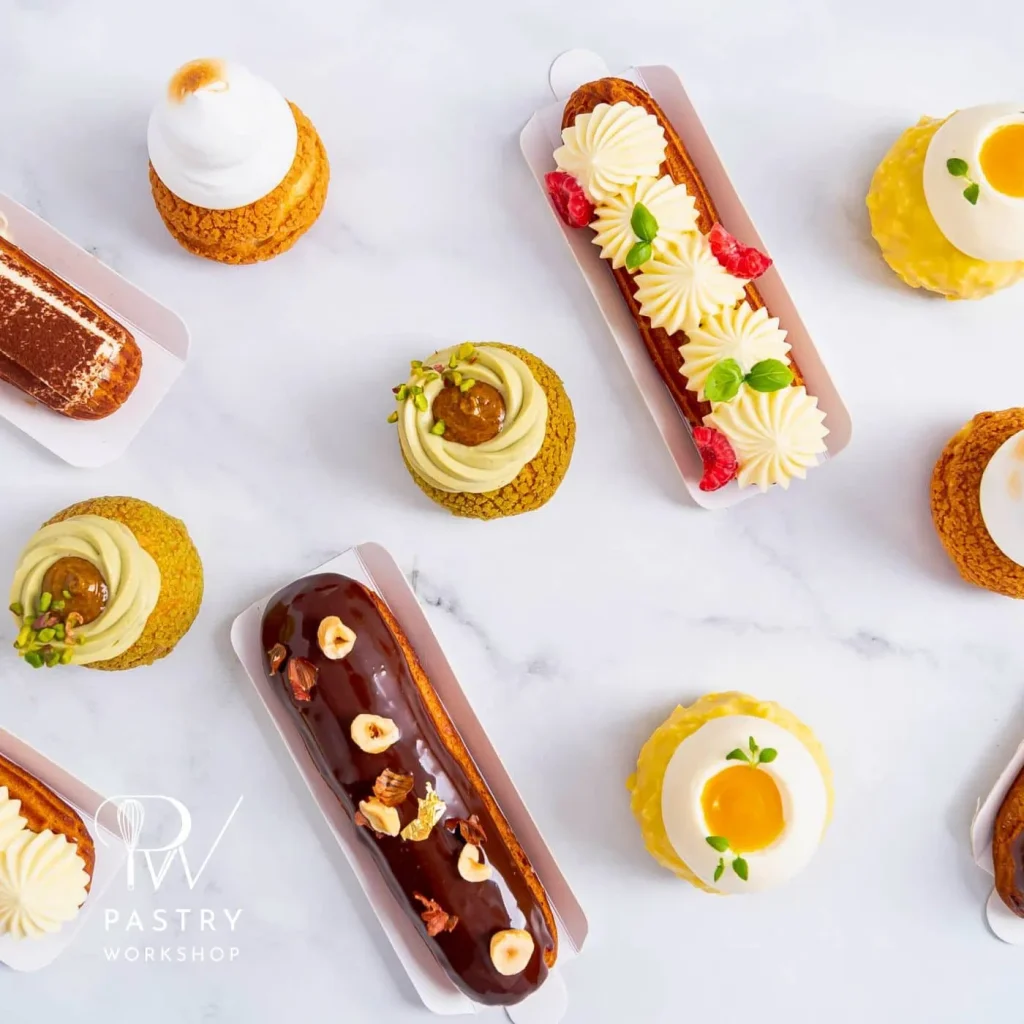
Few doughs in the pastry world have a history and a story as fascinating, and an evolution as complex, as Choux Pastry (known in Romanian as aluat opărit). It is the foundation for some of the most beloved desserts in the world, from the classic eclairs and choux à la crème to the majestic Croquembouche or Paris-Brest.
Origins and Evolution
The story begins in the 16th century, specifically in 1540, when Catherine de’ Medici left Italy to marry the future King Henry II of France. She brought her entire culinary team with her, including her head chef, Panterelli.
He is credited with inventing a dough dried over heat (on the stove), which he named pâte à Panterelli. Over time, as the recipe evolved and was perfected by other chefs, it became known as pâte à Popelini (after the name of the small cakes made from it), and later, in the 18th century, it took the form we know today.
The name “pâte à choux” (literally “cabbage dough”) comes from the fact that, after baking, the small round puffs look like miniature cabbages.
The Modern Perfection: Marie-Antoine Carême
The one who truly revolutionized this dough and gave it its iconic status was Marie-Antoine Carême, the “chef of kings and king of chefs.” He refined the recipe and created the modern versions of eclairs and the Croquembouche, turning choux pastry into a symbol of French culinary elegance and technique.
Why Is It Unique?
What makes choux pastry special is its unique leavening method. Unlike other doughs that use yeast or chemical leaveners (like baking powder), choux pastry relies on steam.
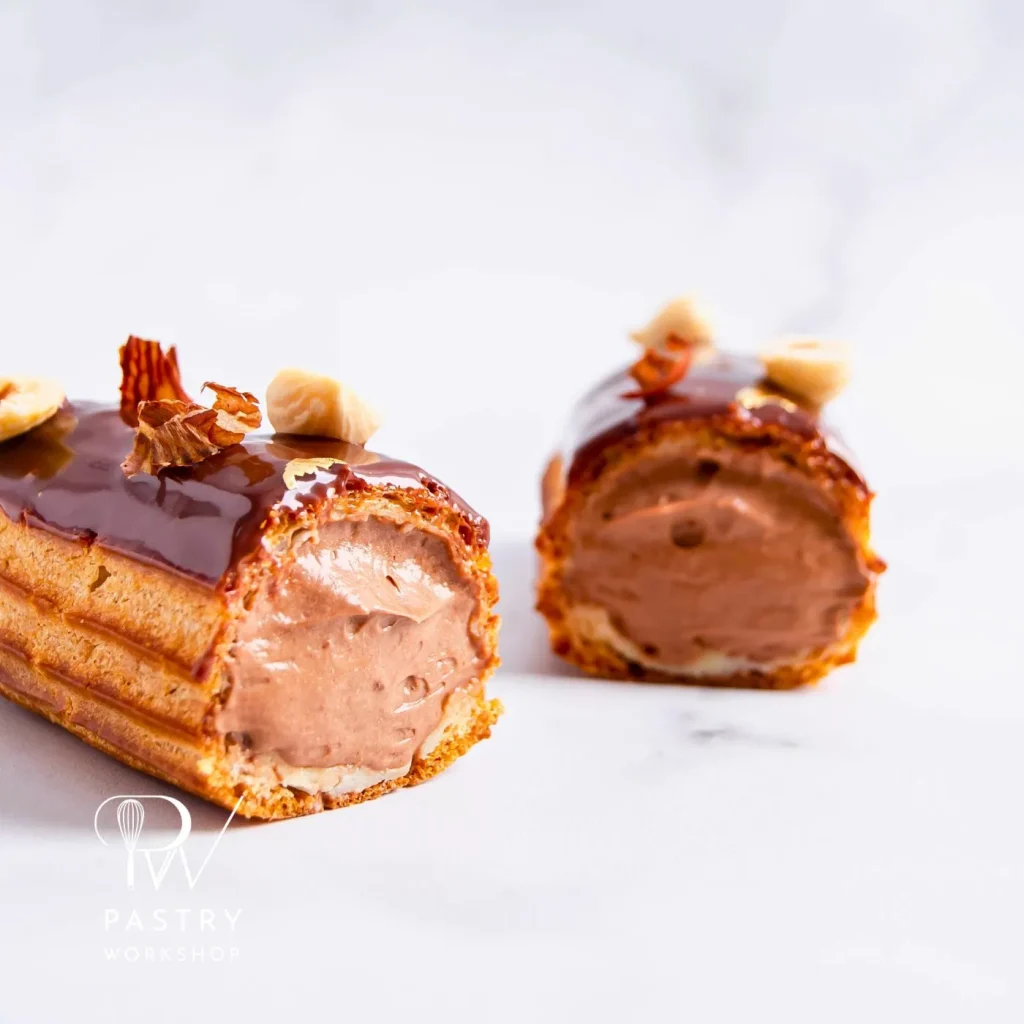
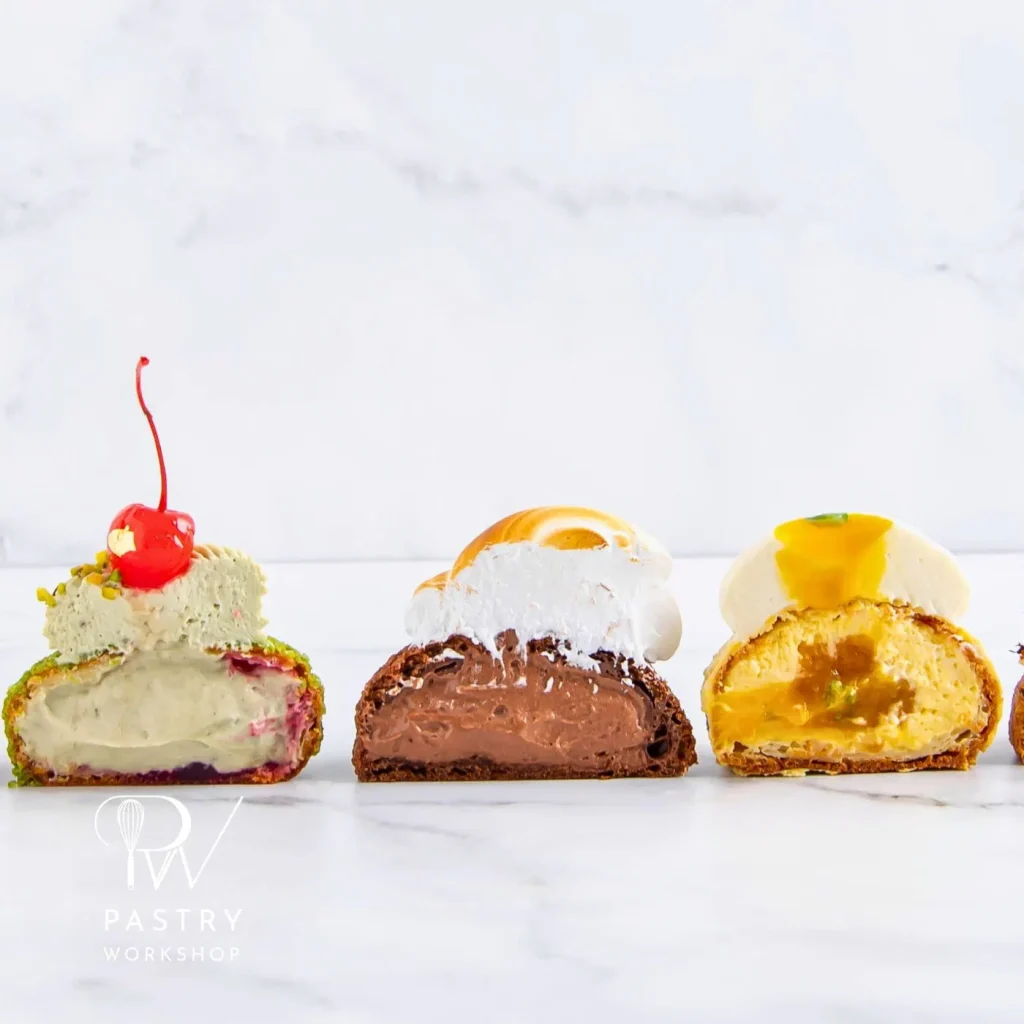
The high water content in the dough turns into steam during baking, pushing the dough outwards and creating a large hollow space inside—the perfect “pocket” for delicious fillings like pastry cream, whipped cream, or ganache.
The Secrets of a Perfect Choux Pastry
Although the ingredients are simple—water/milk, butter, flour, and eggs—the technique is essential:
- Drying the panada: The flour must be cooked with the liquid and fat until it forms a cohesive ball that pulls away from the sides of the pan.
- Incorporating the eggs: This must be done gradually until the dough reaches the “V-shape” or “ribbon” stage—elastic and shiny.
- The Baking Process: A high initial temperature is needed to create steam, followed by a lower temperature to “dry” and stabilize the structure.
Want to bake like a pro? Learn professional layered cakes step by step with our online courses and ebooks – from Red Velvet to Caramel Carrot Cake. Browse the courses →