Gelatin vs Agar Agar – Why They Are Not Interchangeable
Gelatin and agar agar both belong to the same family of gelling agents, but each has different properties and is used in a different way. The table below will help you understand those differences at a glance, so you can choose the right gelling agent for your recipe.
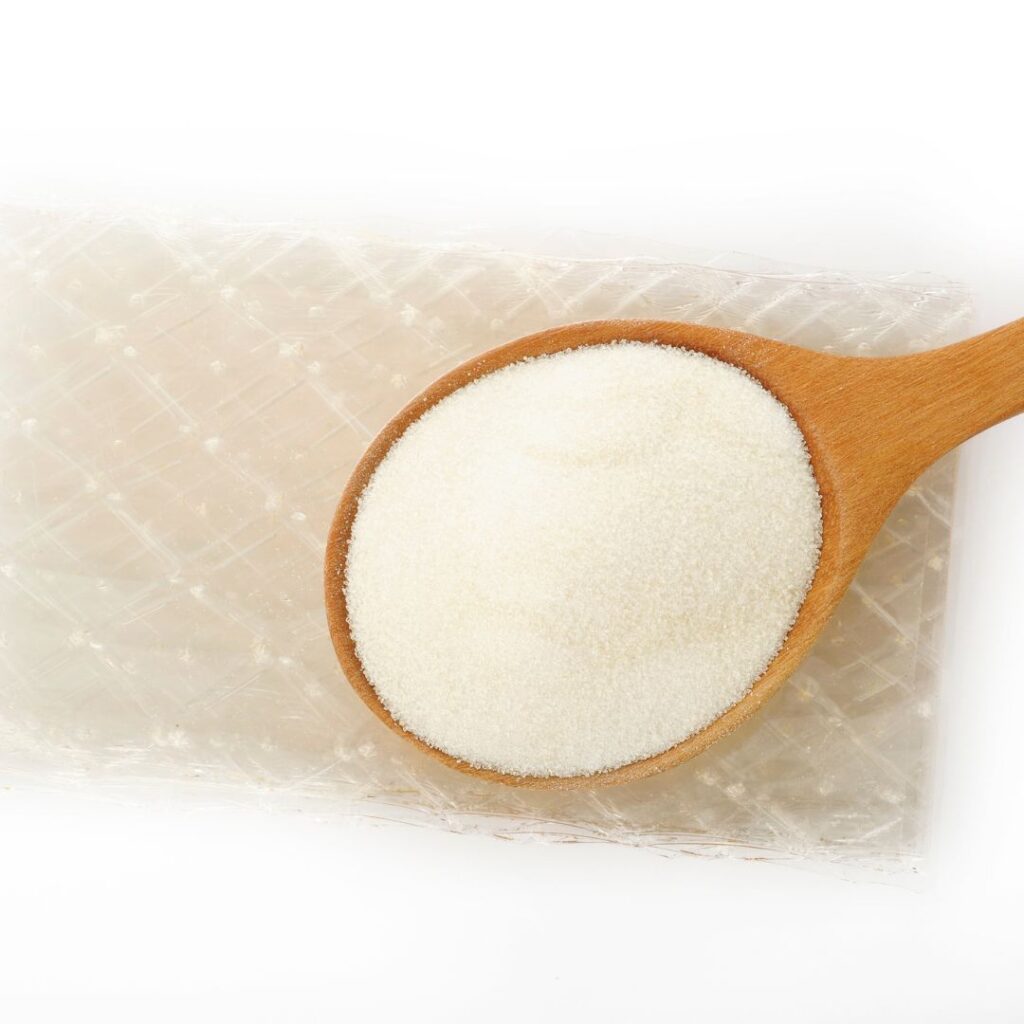
Gelatin vs agar agar: the key differences
| Gelatin | Agar agar |
| Animal origin (cartilage and bones of cattle, pigs or fish) – not suitable for a vegan diet | Plant origin (seaweed) – suitable for a vegan diet |
| Needs to be hydrated (bloomed) and melted to activate | Needs to be boiled to activate |
| Thermoreversible | Thermoreversible |
| Elastic texture once set | Brittle, slightly creamy texture once set |
| Starts setting below 15–20°C; setting is slow, unless the mixture is thermally shocked (a sudden temperature drop or contact with a very cold ingredient or component) | Starts setting while the mixture is still slightly warm (around 35–40°C); setting is fast and visible |
| Comes as powder or sheets | Comes as powder, strands or bars |
| Has a distinctive taste and smell on its own, which disappears in the finished product when used in the correct amount | More neutral, but in excess it has a noticeable taste in the product |
| Melts at body temperature | Melts at much higher temperatures |
| Classified by gelling strength – bloom | – |
| Weakened by acidic ingredients and completely destroyed by some raw fruits, such as kiwi or papaya | Gelling power weakened by acidic ingredients |
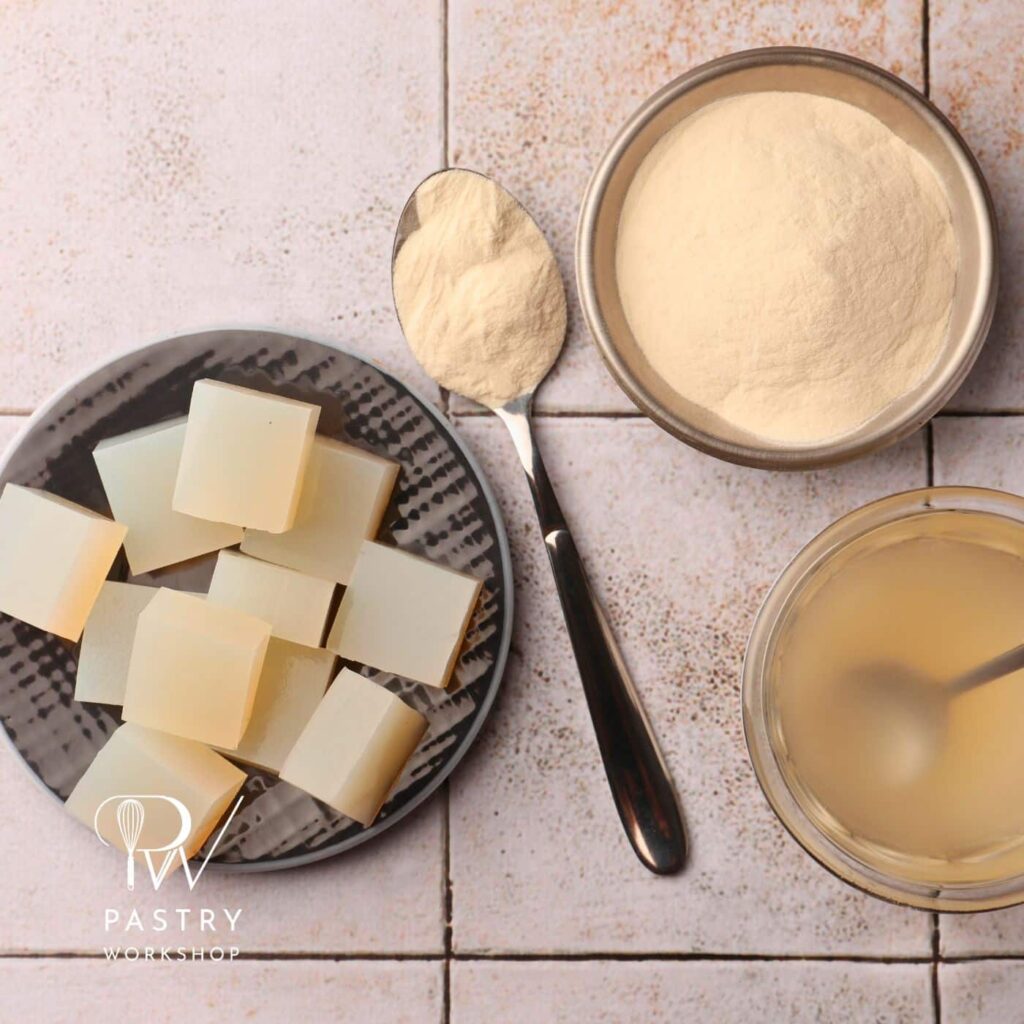
Versatility and texture
The biggest difference between gelatin and agar agar is the sensory experience once they have set. Gelatin creates a fine, slightly elastic texture, while agar agar produces a firmer, slightly brittle one. Gelatin starts to melt even at body temperature, whereas agar agar has a much higher melting point. Their setting temperatures are also different, which dictates how each one is used.
Gelatin is ideal for mousses and creams, while agar agar is better suited to jellies, decorative elements and anything that needs to hold its shape at room temperature. For everything you need to know about working with gelatin – blooming, bloom strength and dosage – read The Essential Guide to Gelatin in Pastry.
Can gelatin be replaced with agar agar, and vice versa?
The answer is simple: no. Although they have points in common, their properties are different. Agar agar is up to eight times stronger than gelatin, the two give different textures and they are used in different ways. In other words, you cannot make the same products with agar agar that you make with gelatin, and vice versa. Many other factors come into play too, such as the other ingredients in the recipe and their melting points.
Want to understand ingredients like these in depth? Explore our Pastry Science articles or join one of our online pastry classes.
Want to bake like a pro? Learn professional layered cakes step by step with our online courses and ebooks – from Red Velvet to Caramel Carrot Cake. Browse the courses →