5 Types of Pepper to Use in Desserts
In pastry we usually associate flavour with classics such as vanilla, cinnamon or dark chocolate. Look a little further, though, and you’ll find less common ingredients with incredible aromatic profiles. Pepper is one of them. Yes, pepper! There are many aromatic varieties – some delicate, some exotic – that can add depth and contrast to your desserts.
Here are five types of pepper you can use in pastry, and how each one can become the star of your desserts.

Wild Madagascar pepper – Voatsiperifery
Voatsiperifery is a rare, exotic pepper from the rainforests of Madagascar. Its name comes from the Malagasy “voa”, meaning fruit, and “tsiperifery”, the name of the plant. It is a variety of Piper borbonense, related to black pepper. It grows wild in the forest, climbing high on other trees for support, and is harvested by hand – the heights make harvesting difficult, which is why it is an expensive spice.
Its aroma is floral and slightly woody, with citrus notes and a discreet freshness, which makes it suitable not only for savoury dishes but also for pastry. It pairs well with dark chocolate, exotic fruit and caramel. Use it finely ground or infused in the liquids of your recipe.
Pink pepper
Pink pepper is often called “false pepper” because it doesn’t belong to the pepper family (Piperaceae) but to the Anacardiaceae family – the same as cashews and mango. The berries come from the Schinus molle or Schinus terebinthifolius tree, native to South America, and are small, round and bright pink, with a thin, fragile skin.
Pink pepper tastes sweetish, floral and spicy without being hot. It is extremely versatile: use it with red fruit or white chocolate, in ganaches and marmalades, syrups or shortcrust pastry. Think of it as an aromatic accent rather than a hot spice.
Cubeb pepper
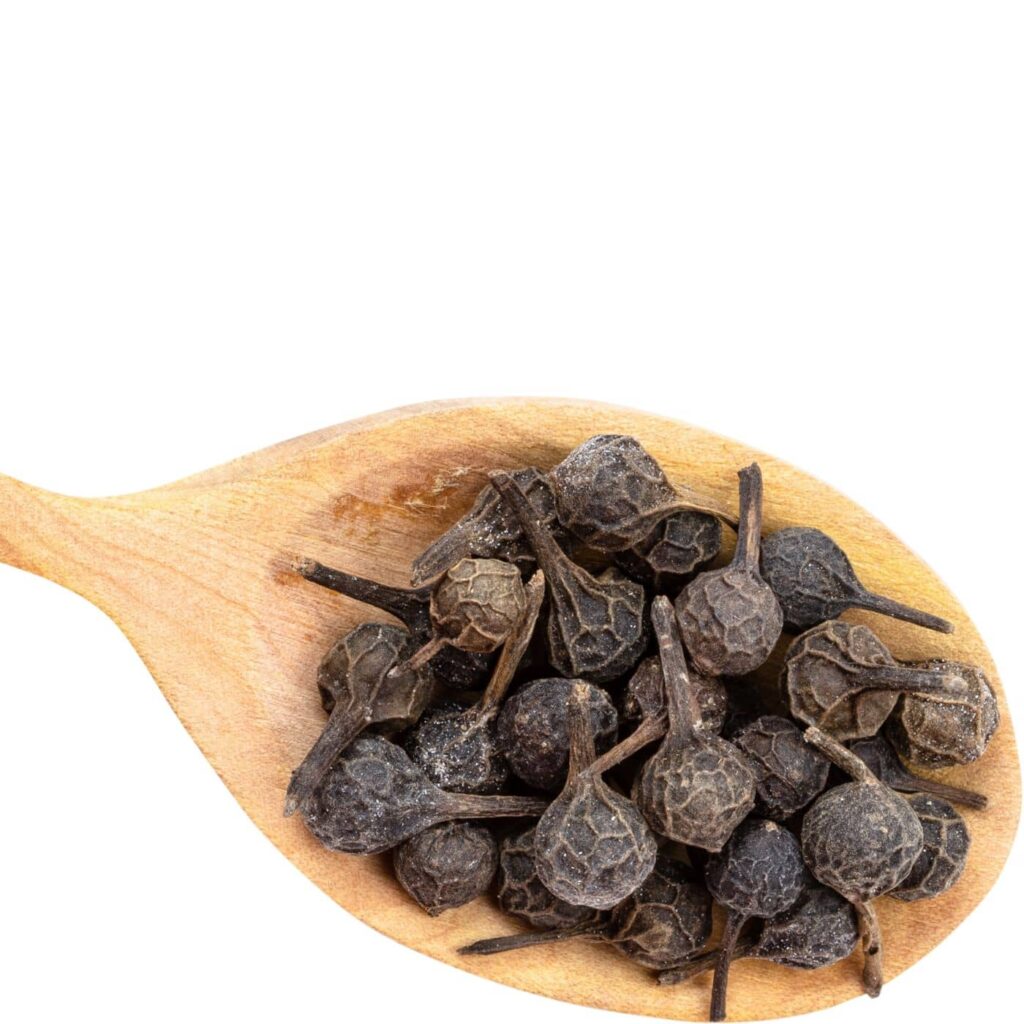
Cubeb pepper, also known as tailed pepper, comes from the islands of Java and Sumatra and is easy to recognise: it looks like black pepper but has a small tail attached, left over from the fruit stalk.
It has a slightly camphor-like aroma with cooling, almost minty notes. Use it sparingly, as it is very intense. It pairs well with dark chocolate, mint or coffee, and can be used ground or infused whole in the liquids of your recipe.
Java pepper
The name Java pepper is sometimes used for cubeb, but the variety used here is closer to long pepper. Originating in Indonesia, it has an earthy, intense aroma with notes of liquorice, a hint of smokiness and something reminiscent of cloves. It works in desserts with citrus, nuts, figs, gingerbread and caramel – add it in small amounts so it doesn’t overpower.

Long pepper
Long pepper is one of the oldest known pepper species, used in India long before black pepper became popular around the world. It has an elongated, cone-like shape and, although related to black pepper, a much more complex aromatic profile.
Long pepper is hot but sweetish, with floral notes and hints of cinnamon and cardamom. It is wonderful in desserts with honey, chocolate, nuts, coffee and plums, used ground or infused in the liquids of your recipe.
Why use pepper in pastry?
Pepper is a wonderful way to explore flavour in pastry, adding contrast and creating new experiences. I find this world of aromas so fascinating that just thinking about the different varieties makes me want to invent, play with ingredients and discover new combinations.
Pepper isn’t only for savoury food. In pastry it becomes a sophisticated ingredient that adds depth and a touch of mystery. Whether you choose a floral pepper, a cooling one or something more complex, it can turn any dessert into a memorable experience. Try it with chocolate first – for example in our dark chocolate chili truffles – and see where it takes you.
Want to bake like a pro? Learn professional layered cakes step by step with our online courses and ebooks – from Red Velvet to Caramel Carrot Cake. Browse the courses →